
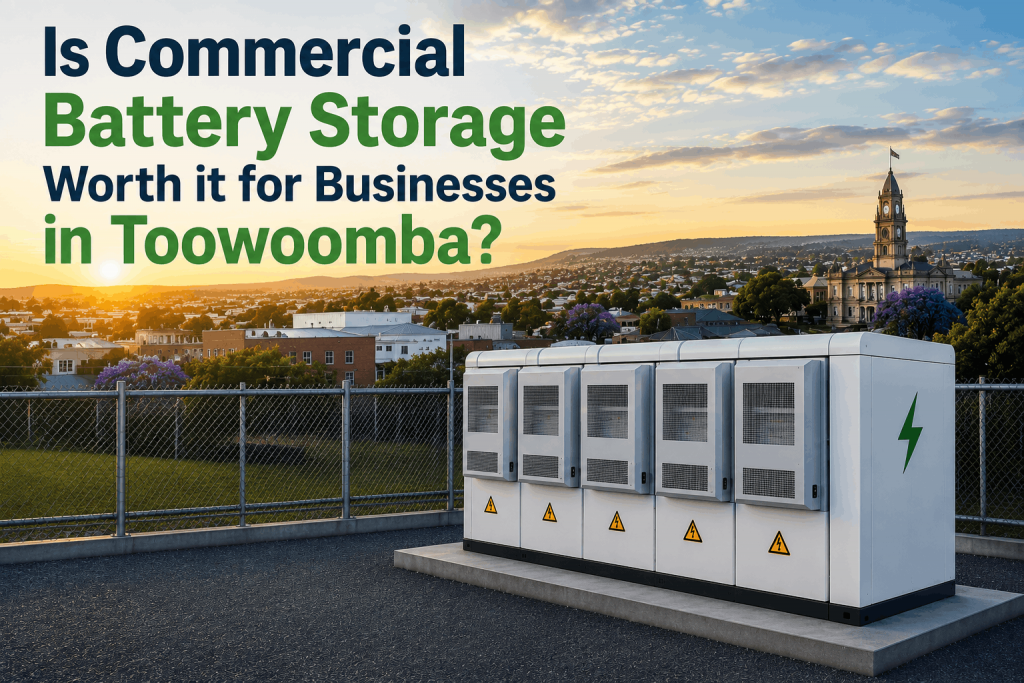
For businesses that use solar power, the math is clear during the day—solar powers the business, and electricity bills go down. The challenge comes at night, on cloudy days, and during times when grid electricity is most expensive. Commercial Solar battery storage systems (BESS) fill this gap by storing extra solar energy and using it when it’s most valuable.
Short answer: Yes, for most Australian businesses on a demand tariff or a time-of-use plan with rooftop solar, commercial battery storage is worth it. The return depends on two things: your electricity tariff and how your business uses power. Businesses that pay demand charges (which can make up 30–50% of their electricity costs) often get the best results. A battery that helps reduce sudden spikes in energy use can save money, even without solar.
But commercial battery storage offers more than just longer solar use. For businesses on demand tariffs—which cover most commercial and industrial customers in Australia—a properly sized battery can lower demand charges. These charges are based on the highest 15-minute electricity use during a billing period. That’s where the biggest savings often come from, and it doesn’t depend on solar at all.
What is commercial battery storage, and how does it work?
Commercial battery energy storage systems (BESS) store electricity from rooftop solar, the grid during cheap off-peak times, or both. They release it when needed. Unlike home batteries, which are sized for a single home’s evening use, commercial systems are designed to match a business’s schedule—when it operates, how much power it uses, its peak demand, and what the electricity tariff rewards.
The main idea is the same as residential systems, but on a bigger scale. A commercial battery checks real-time electricity use and starts discharging when it reaches a certain level—usually during peak usage times or when grid electricity is most expensive. It recharges when electricity is cheapest, such as overnight, during free Solar Sharer times, or through rooftop solar during the day.
For businesses with a lot of solar power, the battery acts as an energy buffer. Solar generates all day, and the business uses what it needs. Surplus energy goes into the battery instead of being sent back to the grid for a low return. At night or when solar production drops, the battery covers the business’s needs using stored energy instead of grid power.
What are the benefits of commercial battery storage?
Reducing Electricity Costs
In everyday business operations, electricity is one of the highest fixed costs—especially for manufacturers, cold storage warehouses, data centers, restaurants, and any business with heavy energy use. Commercial battery storage cuts costs in two ways: by using less expensive grid electricity and by smoothing out big spikes in energy use that trigger demand charges.
For businesses on time-of-use tariffs, a battery lets them use stored cheap energy during peak hours (usually between 2 and 9 pm on weekdays), rather than buying more expensive grid power.
Demand Charge Reduction
This is the key benefit that many articles on commercial battery storage miss, and for many businesses, it’s the most valuable. See the section below for more details.
Energy Resilience and Backup Power
For businesses where a power outage could lead to major financial losses—like cold storage, continuous manufacturing, medical facilities, and telecommunications—commercial battery storage adds a level of resilience that a grid connection alone can’t provide. A properly set up battery system can keep essential operations running during outages, avoiding the solar panel cost and mess of a diesel generator while offering quieter, cleaner, and easier maintenance backup power.
Energy Independence After Hours
Solar power works during the day, but most businesses aren’t only open during the day. Retail, restaurants, cold storage, security systems, and night-time manufacturing all need power when the sun isn’t shining. Commercial battery storage covers this gap, allowing businesses to keep running on stored renewable energy after sunset instead of relying entirely on the grid.
PROTECTION AGAINST ENERGY PRICE RISES
A commercial battery system doesn’t stop you from being affected by how much the grid charges for energy, but it helps lower how much of your energy use comes from the grid. It also helps lock in the cost of energy that was either generated for free (like solar) or bought when prices are lower. The less your business uses the grid during expensive peak times, the less it’s affected by future price changes.
SUSTAINABILITY CREDENTIALS
For businesses that need to report on sustainability, have net-zero goals, or just want to cut their carbon impact, commercial battery storage helps increase how much of their renewable energy they use themselves. Instead of sending extra solar energy to the grid for small payments and buying electricity at night, a battery helps reuse that energy. This is especially important for businesses that supply customers or partners who also have sustainability goals.
WHAT COMMERCIAL BATTERY STORAGE SYSTEMS ARE AVAILABLE IN AUSTRALIA?
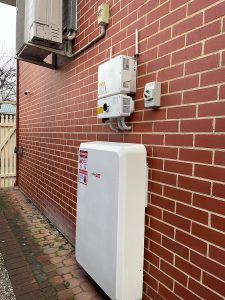
Commercial battery storage systems come in different sizes, from small setups for small businesses up to big custom systems for large industrial users. The important features to look for include how much energy the system can store (in kWh), how much power it can provide (in kW), how long it can last (cycle life), and whether it’s built for indoor or outdoor use.
TESLA MEGAPACK BESS
This is a large battery system from Tesla, designed for big commercial and utility projects. It includes features like liquid cooling and fire safety systems and has a strong track record worldwide. It’s ideal for large factories, big property developers, and projects that need a reliable, high-quality system.
SUNGROW COMMERCIAL BESS
The PowerTitan 3.0, launched in Australia in March 2026, is part of Sungrow’s range of large-scale battery systems. It can store a lot of energy and is scalable. It is suitable for commercial and larger utility projects and is already in use in places like Templers and Cunderdin. It’s a solid choice for large-scale operations.
TRINA STORAGE ELEMENT
This is a container-based, high-quality battery system that works well in situations where modular setups aren’t practical. It’s fully self-contained and can handle storage needs from hundreds of kWh up to large MWh capacities. It’s great for big factories, shopping centers, farms, and major commercial development projects. It’s the starting point for large-scale energy storage planning.
AVOID EXPENSIVE ENERGY.
By using the energy you generate, you can avoid paying higher prices for electricity. This can help cut your business costs.
24/7 BACKUP ENERGY
For businesses that need to keep running all the time, having a backup power source like a battery can keep operations going when there’s a power outage.
PARTICIPATE IN PROGRAMS
A battery allows your business to take part in programs like Virtual Power Plants, which reward businesses for using their energy storage systems.
MAXIMISING SOLAR
If your business has solar panels and is sending more energy than it uses, instead of sending the excess to the grid for little money, you can store it to use later and save more on your energy bill.
IMPROVE SUSTAINABILITY
Businesses that care about the environment can benefit from using more renewable energy during the day and at night.
ENERGY INDEPENDENCE
In a time of uncertainty, energy prices can change a lot. A commercial battery can help protect your business from these changes.
HOW TO FIND THE RIGHT-SIZED BESS FOR YOUR BUSINESS
The best battery system for your business depends on your energy use patterns, the solar setup you already have, the physical space available for installation, and what your energy needs are now and in the future. As a general idea:
| Business Type | Recommended Initial Capacity | Recommended Initial Battery |
| Small commercial (cafe, retail, small office) | 20-40 kWh | Sungrow SBH, Fronius Reserva, GoodWe ESA |
| Medium commercial (warehouse, light manufacturing, hospitality) | 40-100 kWh | Sungrow SBH, Fronius Reserva, GoodWe ESA |
| Large commercial | 100kWh+ | GoodWe ESA, Sungrow SBH, TrinaStorage Elementa, Sungrow PowerTitan |
| Utility/Grid-Scale/Industrial | – | Sungrow PowerTitan, Tesla Megapack |
WHAT AFFECTS THE COST OF INDUSTRIAL BESS SYSTEMS?
Putting an inverter with a battery is a big part of the cost. If you use a battery with an existing solar inverter, it will cost less than if you need a new inverter or a hybrid one that can work with both solar and storage at the same time.
The rules about connecting to the power grid can be different depending on who your electricity provider is and how big the system is. In Toowoomba, companies like Ausgrid, Endeavour Energy, and Essential Energy each have their own rules for commercial battery systems. These rules affect how much it costs to plan and install the system.
The type of battery also plays a big role in cost and how long it lasts. LFP batteries are more expensive up front than older types like NMC or lead-acid, but they last much longer and need less maintenance. For most businesses, this means they’re better value over time.
WHAT’S THE PAYBACK PERIOD FOR A COMMERCIAL BATTERY INVESTMENT?
How quickly a business gets its money back from a battery depends a lot on the electricity pricing they pay. If a business has a high demand charge, it might get its money back within 4 to 7 years. But if they pay a flat rate or a simple time-of-use rate without solar, the payback period could be longer. The only sure way to know how long it will take for a specific business is to do a detailed energy audit and look at how much electricity they use. General guesses aren’t very accurate.
COMMERCIAL BATTERY STORAGE IN TOOWOOMBA: WHAT ARE THE REQUIREMENTS?
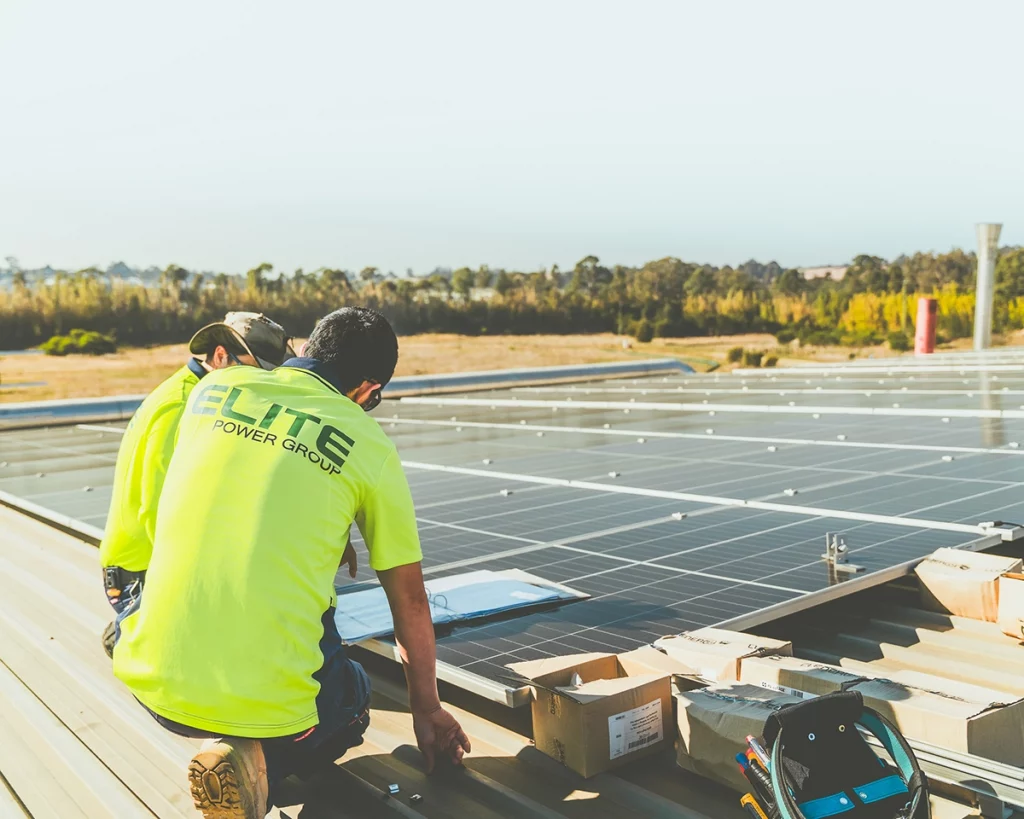
In Toowoomba, there are several things to consider before setting up a commercial battery system:
Distributor rules: Each electricity provider in Toowoomba, like Ausgrid, Endeavour Energy, and Essential Energy, has its own rules for connecting a battery. The size of the system affects what you need to do to get approval. If the system is large enough, you might need to apply formally and could be required to upgrade some equipment. Your installer should handle these steps, but it’s important to understand what’s needed to stay on schedule.
Standard compliance (AS/NZS IEC 62619): This is the standard for battery safety in Australia, covering how batteries are made, tested, and installed. Any good solar installer who is certified by the Clean Energy Council will follow these rules. If a system isn’t up to standard, especially from unknown brands, it could be unsafe and might not be covered by insurance.
Installer accreditation (CEC): Just like in homes, commercial battery installers need to have a specific certificate from the Clean Energy Council. In Toowoomba, check if your installer has the right certificate for commercial systems.
Metering: Most commercial battery systems in Toowoomba need a smart meter that can track energy use in 15- or 30-minute intervals. This is usually handled by your electricity provider during the connection process.
WHY ARE COMPANIES ADOPTING COMMERCIAL ENERGY STORAGE SYSTEMS?
Rising electricity prices: In Toowoomba, commercial electricity prices have gone up over time. As demand charges and peak rates keep increasing, having a battery to store energy helps avoid these high costs.
Solar saturation and low feed-in tariffs: Many businesses that installed solar 5 to 8 years ago are now putting out a lot of electricity for very low feed-in tariffs (3–8 cents per kWh), while paying high prices (30–70 cents per kWh) for electricity from the grid. Using a battery to capture what they export and use internally is now a smart move for many of these businesses.
Green goals and reporting: Large companies with customers on the ASX, government contracts, or who need to report on sustainability are under pressure to show they use more renewable energy. A battery helps them use more of their own solar power, which is measurable and appears in their carbon reports.
Government incentives: Various programs at both the federal and state levels help with the cost of commercial energy storage. Some of these started in 2025 for homes and have also been available for businesses in Toowoomba, Victoria, and Queensland. It’s a good idea to check with your installer about what’s available, since these programs change often.
CONCLUSION: THE FUTURE OF COMMERCIAL SOLAR BATTERY STORAGE
Commercial solar battery storage is transforming the way businesses use energy. It gives them a reliable, sustainable power source, helps save money, and allows them to take part in the energy market. By using their own solar energy more efficiently, businesses can cut their grid reliance, lower costs, and help create a greener, more sustainable future.
As battery technology and smart grid systems keep improving, commercial solar battery storage will become even more efficient, affordable, and widely available. Businesses of all sizes can use the power of the sun to manage their energy use better. This gives them more control over their energy needs and helps them save money while being more eco-friendly. Choosing commercial solar battery storage is a smart choice for businesses and helps create a more sustainable and reliable future.
Frequently Asked Questions
What is commercial battery storage?
Commercial & Home Battery Storage (BESS) energy storage systems store electricity from sources like rooftop solar panels, the grid during cheaper off-peak times, or both. This stored energy is then used during times of high demand, after business hours, or when there’s a power outage. These systems are specially designed for businesses, with a larger capacity and higher power output compared to home systems. They also work with the business’s energy management systems to help them use energy more efficiently.
What is the difference between commercial and industrial battery storage?
The main difference is the size and how they are customized. Commercial storage is usually for smaller businesses like offices, shops, hotels, and small- to medium-sized factories. These systems typically have a capacity of 20 to 200 kWh. Industrial storage, on the other hand, is used for bigger operations such as large manufacturing plants, mines, big farms, and utilities, with capacities often over 200 kWh and built in custom enclosures.
What is the best commercial battery storage system in Australia?
In Australia, as of 2026, Sungrow’s SBH series and BYD’s Battery-Box range are among the most commonly used and trusted options for commercial applications. However, the best system for a business depends on factors like how much energy they use, their existing equipment, site conditions, and budget.
Does commercial battery storage work without solar?
Yes, it can. A commercial battery can be charged with cheaper grid electricity during off-peak times and then used during expensive peak hours. This helps reduce energy costs. While the returns are lower without solar, for businesses with high energy bills or large peak usage, it can still be a good investment.
What is commercial ESS?
ESS stands for Energy Storage System. In the commercial and industrial sectors, the terms “commercial ESS” and “commercial BESS” are often used together. Both refer to battery-based systems that store electricity and are designed for use in business settings.
Is commercial battery storage worth it for small businesses?
It depends on the type of electricity bill and how the business uses energy. Small businesses that pay a flat rate and don’t use much energy during peak times may not get much benefit. However, small businesses with solar panels and high daytime energy use, such as cafes, small manufacturers, or stores, can see good returns. This is especially true as Prime Goal solar system costs continue to fall and with support from the federal government’s battery programs.